

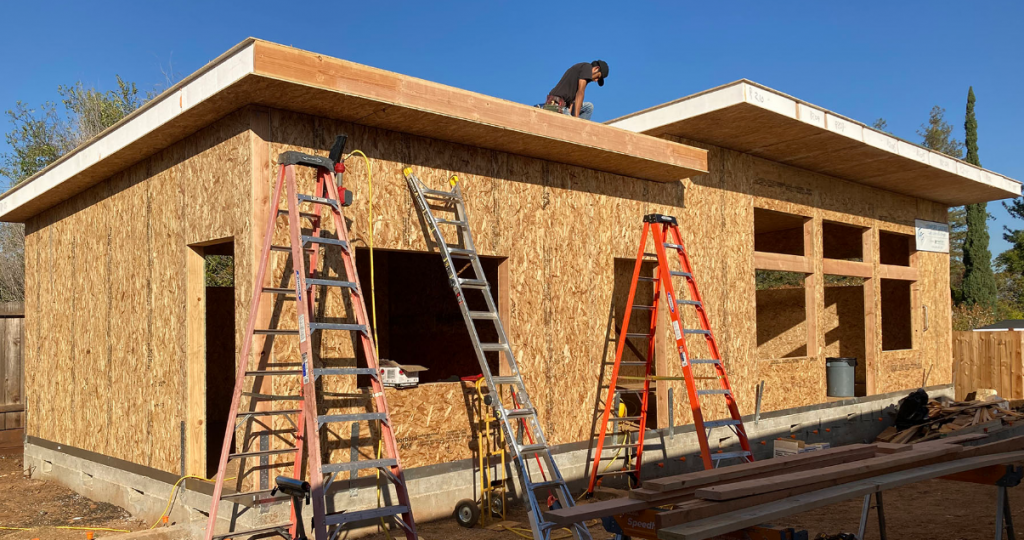
Structural Decisions That Shape Your ADU’s Performance
The framing system behind your walls impacts energy efficiency, build timeline, inspection flow, and long-term durability. Here’s how we evaluate SIPs and traditional stick framing for each property.
SIPs vs. Stick Framing: Choosing the Right Structure for Your ADU
We’ve built ADUs using both systems. The right choice depends on your property conditions, performance goals, and approval pathway.
The structure behind your walls determines performance, efficiency, long-term durability, and build sequencing. Both systems work.
The right choice depends on your property, your goals, and your approval pathway.
Two Proven Structural Methods
Traditional Stick Framing
Built on site using dimensional lumber.
Strengths
- Flexible during construction
- Familiar to inspectors and trades
- Straightforward for complex modifications
- Often lower upfront material cost
Best fit when:
- Budget sensitivity is the primary driver
- Site access is tight
- Modifications are likely during permitting
Structural Insulated Panels (SIPs)
Factory-built wall and roof panels with integrated insulation and structural skin.
Strengths
- Higher energy performance
- Faster dry-in timeline
- Straighter wall systems
- Reduced air infiltration
Best fit when:
- Energy efficiency is a priority
- Build speed matters
- Long-term operating performance is important
- Clean structural execution is desired
Performance Comparison
| Topic | Stick Framing | SIPs (Structural Insulated Panels) |
|---|---|---|
| What it is | Traditional wood framing built on site | Factory-made insulated wall panels assembled on site |
| How common it is | Very common | Increasingly used especially with new CA Title 24 |
| Design flexibility | Very flexible; easier to change during the build | Requires decisions up front for exterior changes |
| Construction speed | Slower framing phase | Faster once panels arrive |
| Energy efficiency | Can meet code with proper upgrades | Naturally energy-efficient |
| Comfort & insulation | Depends on insulation quality | Typically more consistent comfort |
| Air sealing | Inherently less | Usually tighter construction |
| Permitting & inspections | Familiar to most inspectors | May require extra coordination by Contractor |
| Upfront cost | Slightly lower. 2026 Title 24 increased costs | Often higher |
| Long-term energy costs | Varies | Often lower |
| Best fit for | Custom designs or evolving plans | Performance-focused builds |
When Each System Makes Sense
For performance-focused builds prioritizing energy efficiency, faster dry-in, and long-term operating savings, SIPs often deliver measurable advantages.
For projects requiring high layout flexibility, phased modifications, or tight upfront cost control, traditional stick framing remains a strong option.
How We Decide What’s Right for Your ADU
Method selection is based on:
- Lot conditions
- Jurisdictional approval pathway
- Architectural complexity
- Energy goals
- Budget alignment
- Timeline priorities
The structural method supports the project strategy, not the other way around.
How This Fits Into Our Process
Every project moves through the same disciplined feasibility review.
During that phase, we evaluate:
- Zoning and structural constraints
- Access and load paths
- Inspector familiarity in your jurisdiction
- Cost and sequencing impact
Then we determine the right structural system for your site and goals. Clear decision. Structured execution.
What Happens Next
The fastest way to determine the right structural system for your ADU is through a structured feasibility review. Once site conditions, jurisdiction requirements, and goals are defined, the decision becomes clear.